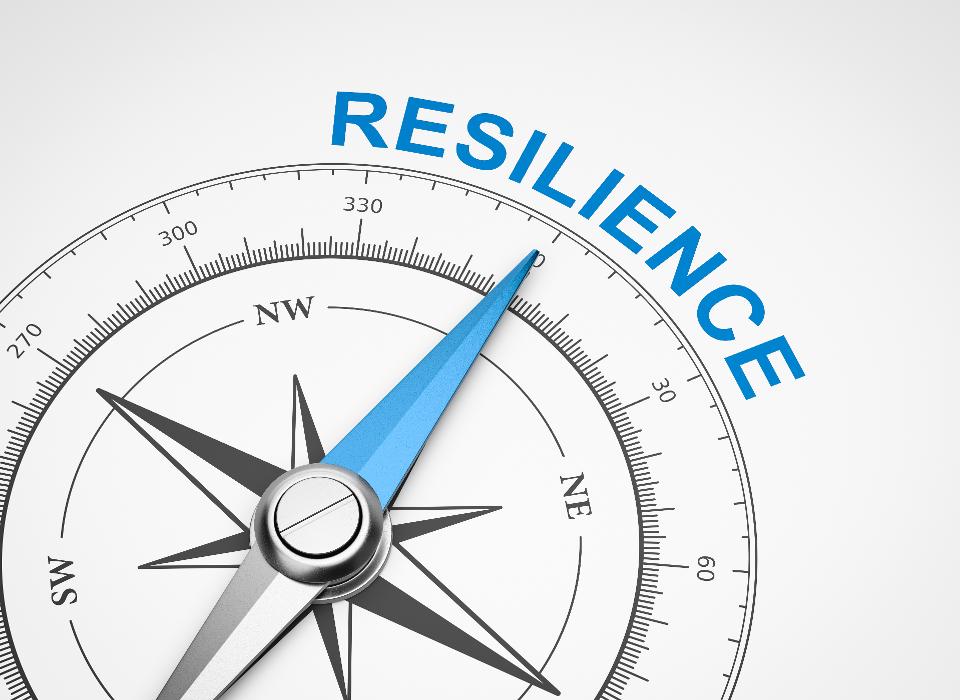
Resilience
Re-examining #Resilience
Take a moment and consider your current understanding of the word “Resilience.”
A Question:
Do you consider your understanding of #resilience to be deep, or surface level? It seems that in our day-to-day culture the word has become more of a descriptor of character or action, rather than as a true understanding that the word more accurately describes a person’s ability to persevere through an adversity, a challenge, a trauma, a life-changing circumstance, and to demonstrate a strength in their resolve that comes from the experience.
What is true #resilience?
It’s not just about winning a sporting event, or getting through a test, or even making it through a day. It’s more about having and demonstrating the ability to recognize that whatever the adversity was, or is, was more than likely not a personal descriptor of the individual experiencing that adversity, but something that has occurred to them, that they have dealt with, and have learned from. Resilience is about overcoming, battling through, surviving, and growing from adversity, and limiting the negative impacts from derailing future success for that person.
What does research say?
Researchers have recognized the ability of an individual to reframe events so that they do not internalize them, and use the adversity as a means for growth and success. For many people these challenges are recognized as launching pads for new ideas, new strategies, new ways of acting, or for new ways to limit the impact of adversity from negatively affecting themselves any longer. The stories are numerous of those individuals who have come through adversity, and who then have not only improved their lives, but the lives of others.
Locus-of-Control
Further, it has been found that those that demonstrate resilience tend to have a firm locus-of-control on where the problem exists, how it came about, and they are able to distance themselves from the trauma. Now, this doesn’t mean that people don’t feel the pain from trauma, or are not affected by it, yet they tend not to own it, ruminate over it, and allow it to remain in their frontal lobe exhausting their energy, resources, thought process, or ability to move forward.
Reframing Skill
So, if the ability to maintain a powerful locus of control, and to reframe events to be able to limit their negative affects on us are two assets that can be utilized to build resilience, then why wouldn’t we seek to support the development of these skills in our children and each other. If people can learn to reframe, if they can distance or remove themselves from traumatic events, then they have more of an opportunity to demonstrate resilience, and to enhance this skill for when they will need it in the future.
Variance
We know that one person’s challenge is another person’s trauma, and that each person may react differently to the same circumstances, and in turn may react on different timelines to trauma, and this makes the point even more important that we must seek to build the resilience of our children, and each other, each day, for we never really know when the next traumatic event might initiate a down-turn for ourselves or someone in our world.
The challenge
Let’s build each other up! Let’s build skills in each of our children! Let’s build resources in our communities! Let’s share the message of supporting the development of Resilience skills in our children! Let’s focus our energies on engaging, supporting, and providing the healthiest environments that we can for all of our children!
Are you with me? I hope so!
Robert A. Martinez, Ed.D, @ResiliencyGuy on Facebook: ResiliencyGuy
Dr. Martinez is the Assistant Superintendent of Human Resources in the Fairfield-Suisun Unified School District, and has been focusing on building the idea of Transformational Resilience in people, our schools and our communities. He also co-moderates #Resiliencechat on #twitter each Monday night at 7:00 PM PST.

Connect, Appreciate, and Build a Sustainable Transformation
Connect, Appreciate and Build a Sustainable Transformation

Connecting: When we connect, even for a moment, we demonstrate the ability to build relationship, be human, show love, and to build a community.
When we connect with those in our environments we take the first step in demonstrating to them that we care, that they matter, and that we believe in the value of them as a person with individuality, ideas, and thoughts that matter to us. We tell them that not only do we care about them, but they have a place in our world, and in our collective reality. Whether this connection is a simple acknowledgment, a wink and a nod, a brief conversation, or a heartfelt hello, we must strive to ensure that we are making these connections.
Think about it, in your world, when people take that moment to actually connect to you do you feel more alive. I think that as we go through our busy days, we often become so consumed eith our internal thoughts, our minds focused on problem solving, and with gathering information from our technological devices, that we sometimes forget to recognize that others are seeking to connect with us. For example, as I was ruminating over my day’s work, driving home, stopped at a stoplight, with the news radio blarring at me, I happened to look to my left.
It took just a few seconds, and yet there she was. An elderly African American woman I didn’t know, sitting in the passenger seat of the car to my left. She smiled, gave me a little wave with her small right hand, and nodded to me. It was no more than a few fingers being lifted to let me know that she saw me, and that smile and nod refocused me into realizing that my work-day, though long, filled with the troubles of others, and with complex problems with solutions that were hopefully on their way, was actually not that bad at all. She let me know that she saw me, she connected with me, she ackknowledged my exsistence, and I was grateful.
Appreciation: If we miss a moment to show appreciation, we miss an opportunity to potentially change the world! Don’t miss those moments!
Do moments in your day seem to fly by in clusters where you move from cluster to cluster without recognizing the efforts of others? For me it happens all too often, and I want to be better at recognizing the efforts of others, then in demonstrating appreciation for the efforts of others. This will take a conscious deliberate effort in seeking to notice these efforts, and a purposeful response to demonstrate that I’ve noticed, and appreciated those efforts. Please consider joining me in these efforts.
It could be as simple as saying, “Thank You.” It could be as simple as writing a post-it-note with a smile on it, and leaving it in a conspicuous place for the person to find, or it could be a brief email, text, snapchat, tag in a twitter post, or any other entry into the technological stream that the person swims, to let them know that you noticed, and appreciated their efforts. The venue isn’t the important thing, it’s ensuring that the person that you want to demonstrate appreciation for realizes that you care, you noticed, you appreciate them, and that you are not taking for granted their efforts.
Our world today is moving so fast, and yet, it is these moments that are so important to us as people, and it is these moments that could actually make an impact on our personal story, the story of the people in our world, and the broader world in general. Consider how your reality might change if you offered more appreciation to others. Could you ingnite a new way of acting with people in your reality? Could this new way of acting spread to those people, and their realities? Could we, as some have said, actually change the world by initiating a “Chain of Appreciation” that links us all together? What if we could? Why wouldn’t we?
Building a Sustainable Transformation: This takes ideas, dedication, and follow through! #Resilience #EachPersonMatters
To change the world is no easy feat, and yet, what could be more meaningful? So to those that actually dare to take on this challenge with me, I say, “Welcome, to wherever you are,” and “Let’s travel this journey together.” Whether you are a teacher, an educator, a person who cares about others, or the head of a major corporation, it just doesn’t matter, since no matter who you are, you do have the ability to change your world, impact the world of the people within your world, and quite possibly, change the entire world.
You simply need ideas that you believe in, dedication to initiate a change in your own behavior, and perserverance to follow through on your own behavior. In addition, if you create opportunities for others in your world to follow your example, and set expectations for those in your world that will lead to them supporting your ideas, then your goals become closer to your reach.
As this blog suggests, if you seek to increase your personal connections with others at every opportunity, if you begin to increase your appreciation for others that you are connecting with, you will be taking significant steps to build a sustainable transformation in your world, that can, and will, impact those in your world, and quite possibly ignite a change to our collective world. I ask again, What if we could? Why wouldn’t we?
Peace, Rob Martinez, Ed.D.
Dr. Martinez, strives to empower adults to build environments for children where they can “Grow in Peace. He can also be found on twitter as @ResiliencyGuy and @DrRobM_FSUSD
Dr. Martinez will be presenting at the American Associationi of School Personnel Administrators Conference, “Human Capital Leadership Summit” in Monterey, California, on December 3, 2015, and at the “National Conference on Resilience in Education” in Las Vegas, Nevada, the weekend of December 5-6, 2015.
The Success Iceberg
The “Success Iceberg”

Are you building your “Success Iceberg?”
Do you recognize the efforts of others as you view their success?
Are you planning and implementing your next step to greatness?
Or, do you need a little nudge to get you going? If so, read on my friends!
For those that are desiring to become something more, reach a certain status, and/or want to advance yourself to be successful, consider the importance of planning, implementing your plan, and sticking to it as you engage in your personal journey. This process of personal development is yet another form of Transformational Resiliency. It’s about empowering yourself to initiate personal change, seek personal growth, expand on your personal development, and accept that you can be in control of your destiny.
The commitment that you make to yourself must be the ignition of your success. You must first make a decision regarding something that you are passionate about, think through the steps you must go through, and firmly decide that you will follow your steps no matter what obstacles come your way!
Next, you will need to work harder than you have ever worked in your life. Why? Because your success must be that important to you, and you must recognize that no one is going to come and do it for you. Own your choices, own your actions, own your successful steps towards your goals!
Third, maintain your personal commitment, and carry through with your daily behaviors, even when the tiny voice in your head might wish to delve into self-doubt, or veer your away from your overall goal. Focus on your success, strive tor personal bests, and acknowledge the growth in yourself.
Be aware that set-backs are a natural part of growth. How many times does a baby fall on their way towards toddling around? You can handle these minor halts in growth, and as you have done in the past, you can ovecome them to improve, to gain confidence, to build new skills, and to conquer any hurdles that come before you!
Finally, remain ever vigilant, and relentless in pursuit of your success! This persistence in your thoughts, actions, and new skills and behaviors will propel you towards acquiring the level of success you desire.
Some might think to themselves, “Can I really do this?” or, “Am I truly worth this type of self-commitment?” Let me be clear in providing you a response to these self-doubts! “You are that important!”,
I undestand that making a real personal commitment is dificult, that the real work is difficult, and I also want you to understand that the true rewards received as a result of this personal commitment and completion of the real work will taste sweeter to you than ever before!
Now, identify your success, plan your steps to attainment of your goals, and get your behind to work!
Peace! Rob
Rob Martinez is becoming well-know as “ResiliencyGuy” and “Dr. Resiliency” and can be followed on twitter @ResiliencyGuy and @DrRobM_FSUSD
Refresh, renew, rekindle, reflect, and recharge those batteries
I think that each person has an unlimited ability to bring positivity to the world, and yet, if each of us gives, and gives, and gives without taking time to recharge our batteries we do run the risk of running on emply, and sputtering out like an old VW Bug. Thus, it is important for each of us to refresh, renew, rekindle, reflect and recharge those batteries.
Refresh
Each of our journies is important, and yet, if we stay on the same course for too long we run the risk of running ourselves into a rut. We must remember to pull to the side of the road, take a pit stop, small the flowers as they say, and heck, even eat a candy bar. It’s the simple pats of our lives that can become so important to refreshing our spirit, our palate, and our perspective of the world. Maybe your choice will involve a smooth bottle of red wine, an oyster or two, or even some freshly cooked french bread, just remember to take that moment, breathe, breathe again, and smile before you get back on your journey.
Renew
Have you done something new lately? Tried painting, sung a new song, karaoke perhaps, or even taken a new route though the grocery store. It might seem so simple, yet having a new experience, or even changing up an old experience can lead you to see things in a differrent way. Our eyes, senses, brains are all looking for new ways to see things so give them the experiences they desire. By keeping things fresh we offer ourselves new growth opportunities.
Rekindle
Have you taken a step back, and considered why you do the work you do? Is it just for a paycheck? Is it just a job? Or, have you found your passioin? Or, do you remember why the work you do is your passion? Or, do you need to find a new passion in the work you do? Simply put, your passion should guide your work, and if it doesn’t, take some time to rekindle your passion, or find a new passion in your work, or find new work that you can be passionate about. My dad once said to me, “If you do what you are passionate about you will never work another day in your life.”
Reflect
Upon review It might seem just a bit selfish to consider refreshing, renewing, and rekindling your life, and yet, the practice of reflection is so essential to mindlfulness and growth, and is of paramount importance to self-actualization. For those that don’t take time to reflect they run the risk of self-presumption, and potentially false confirmation that what they have done or are doing is always right. While those that take the time to reflect on their actions, their choices, their thought patterns, and their lives, place themselves in a better place to change things for the better. Remember, reflection doesn’t mean that you have to review everything, and change it all! It simply means that you give yourself time to consider things and determine how you can improve parts of you personal puzzle for self-improvement.
Recharge
Believe me, I am not perfect, and often I am one of those folks that doesn’t give themselves the opportunity to refresh, renew, rekindle or reflect, and I can absolutely feel my batteries getting drained as I drive myself into a rut. I have realized that I find it difficult to sustain a super high energy level with no rest, and I need to be reminded to slow down, take a pit stop, smell the flowers, eat a candy bar, and enjoy it wirh a smooth bottle of red wine.
Remember, it’s okay to give, and give, and give, just understand that its also okay to give yourself some time as well. You will be glad you did.
Dr. Rob Matinez is the Assistant Superintendent of Human Resources for the Fairfield-Suisun Unified School District, and is a Board of Director for the Association of California School Administratorscan. He can also be followed on twitter as @ResiliencyGuy and as @DrRobM_FSUSD
Tale of Two Types of Teachers
Image Posted on Updated on
Tale of Two Types of Teachers: One Brings Forth Transformational Resiliency, the Other Threatens Students Success-Time to Choose!
My dear fellow educators, parents, people who care about children, and supporters of a better world, let me first say clearly, each and every child you know needs your support, care, love and understanding. I further believe that each child you know is entitled to an educational environment where they are encouraged to grow in peace, able to stretch their thinking, advance their skills, build a healthy psyche, and become college, career, and community ready!
Quite simply, each child is entitled to learn in an environment that focuses on building Transformational Resiliency, and one where a child’s success is never threatened.
Unfortunately, in some of our schools today I must confess that there continues to exist some adults whose talents and skills do not focus on providing support, care, love, understanding, empathy, and growth mindset models to children. Instead, they hold a mis-guided belief that the tactics of fear, intimidation, power, control, shame, and punishment are effective strategies for keeping children in their place, quiet, compliant, and focused on solely outdated academic pursuits as defined by these mis-guided individuals. Hold for a moment while I gasp along with you, and shake my head at the reality that some of these adult individiuals are mis-guided teachers who desperately need our intervention!
I’d love to tell you that this is a myth, and yet, to my dismay, I have heard words from some teachers’ mouths directly to my ears, that describe situations that could only lead to frustration and negative success for many students. Some of these statements sound like: “We must lay down the law…we must convince them (students) that we are in control…we must demand that they respect us…we must be sure that they know the consequences of their actions…we must force them to behave…we must suspend them at the slightest misdeed…we must never let them see our weakness!”
While some people might seek to understand these statements, and some might even agree that each classroom needs order, that children must be provided parameters within classrooms, and that when there is no order chaos could derail many a classroom, the underlying premise of these statements is one of intimidation and fear, which is by no way a means to an end where children are involved. It saddens me that these feelings might reside in anyone.
This is a sad fact that there are those in positions of power, including some teachers, that seek to control students. Further, where these sentiments exist there may be a push by some to garner support, and replicate these thoughts. It is worrisome when a veteran teacher with such beliefs, who thinks that it is their duty to share their “wisdom” with new teachers to ensure compliance of students across their school, is the main voice on a campus without discourse occurring. I must say this practice of passing of knowledge, this training of the newbies, this approach to control, domination, depowerment, has no place in our schools, has no place in the raising of children, has no place in the growth mind-set that is needed to support our children. Further, these tactics especially have no place where children have experienced trauma, pain, discrimination, and disparate treatment from their community, and these children need emotional nourishment, not emotional neglect. In fact, the complete opposite is needed for children to grow in peace.
Now, rest assured, that situations are not like this everywhere, and know that a growing proportion of educators are striving, pushing, leading other educators to understand that the first and foremost important factor that will combat this approach is to first be a person, a human being, and to allow our children to know that we are humans with true interest in developing relationships with them as people. These healthy relationships are so needed across our educational institutions, and are indeed an avenue to save children, and in turn save ourselves. When educators seek to provide positive educational environments, where the resilience development of children becomes one of the prevailing factors of the work, and where adults are consciously aware that they matter in the lives of children, extremely positive outcomes are possible. This paramount priority of building relationships must be at the forefront of an educator’s mission on a daily basis for real and true growth of children to occur.
In many of the conversations that I have had with such educators I have heard words of inspiration, words that are filled with encouragement, words that are supportive, demonstrate love and care, and words that can indeed lead to the enhancement of positivity and quite possibly change the world. Some of these words include: “We must seek to understand each child that enters our classrooms…we must strive to build relationships, and be human beings…we must help our children develop their internal locus of control…we must create respectful environments where each child can give and get from their community…we must provide opportunities for children to see their futures, to build capacities they never imagined, and to learn how to support each other…we must seek to heal children…we must seek to forgive children…we must seek to restore justice to our classrooms, schools, communities so that children learn to understand the power they hold in their lives…we must strive to empower children, all children, each child, to be ready for the future they can, and can’t see!” Then as believers of education we must inspire those that are doing this important work with our children each day to continue, and to bring their colleagues with them to create a positive tipping point for each school!
When I hear these positive statements from teachers I am inspired. When I see these types of positive strategies and behaviors being implemented I am enthralled. When I hear groups of teachers engaged in discourse that is focused on building relationship with and among students in classrooms, hallways, quads, schools that are providing environments that are empowering children to be safe, build positive relationships, learn how to trust our educational institution, and to use the resources provided to them to grow themselves and each other, I am humbled to be an educator. And, my dear colleagues, it is happening. It is happening due to the strength of individuals, the courage of educators, the resiliency of children, the implementation of professional development that encourages and educates teachers about their power to truly change lives through making connections with children, and by not thretening a child’s success.
It is happening in more and more classrooms and schools. Teachers and educators are learning how to “Capture Kids Hearts.” Teachers and educators are helping children to “Be The Change.” Teachers and educators are striving to support children with understanding “Rachel’s Challenge,” and to initiate a chain of kindness. Teachers and educators are fostering healthy conversations. Teachers and educators are encouraging restorative justice practices. Teachers and educators are understanding that it is with support, love, caring, and focusing on the betterment of children that real change occurs, and that by dismissing the old myths that we gain something by controlling children is a practice that has reached far beyond its shelf-life.
Teachers and educators are building classrooms and schools where social-contracts are the rule, not the rarity. Teachers and educators are understanding that the power of positive mental health instruction and social-emotional learning curriculums are a priority for each classroom. Teachers and educators are empowering each other to create environments where Transformational-Resiliency practices are flourishing. Teachers and educators are rebuking the false promises out-dated strategies that seek to control children, and are replacing them with strategies that are nuturing and nourishing students.
If you have stayed with me through this writing you have probably picked up that I hold quite an internal passion for this topic. Yes, my wife and I have four boys, and one with some significant difficulties simply attending school, and each and every time I hear someone speak of the need to control studentes I cringe, I gasp, my heart races, and my blood begins to boil. I am seriously concerned for my son experiencing anyone who might wish to threaten his success, and I pray that each educator that he may meet over the remainder of his education will be someone who will seek to employ Transformational-Resiliency practices to encourage his success.
I ask you, in your work, in your life, in your role, if you hear any educator speak of the need to control students, please challenge their ideas, tell them that you are sorry for their perception and experiences that might have led them to this perspective, and explain to them that there is another way, a better way, a way of engaging students through practices that focus on kindness, care, compassion, empathy, and relationship building. Tell them that they have time to change, that the children they work with each day deserve the best they have to offer, not just the control they want to implement, and quite frankly it might be time to tell them that if they cannot choose to change, they might want to choose to leave. Our children deserve only the best!
Tell them about Transformational Resiliency: The growth, development and strengthening of a child’s personal resiliency as a result of being provided an engaging, positive, thoughful, supportive educational environment.
Peace, Robert A. Martinez, Ed.D.
@ResiliencyGuy @DrRobM_FSUSD https://resiliencyguy.wordpress.com/

Shared World
Image Posted on
Shared World
This post is dedicated to Matthew M. Martinez, and Rayne Jane Winter-Day, two young adults who are seeking to understand some of the issues surrounding #Ferguson, and the broader implications for our society. Whether you believe in the cause, believe in the protests, believe in the mass media reports, believe in the injustice, or believe justice has been served, I hope to get you to question your understanding of some of your current believes about our “Shared World,” and to realize that you have a part in building shared sustainable solutions. Do I have all of the answers? Absolutely not, yet I hope to bring to you some more questions that hopefully will allow you to consider various perspectives, which I always believe will lead to personal and compelling growth. It is all about each one of us, our effect on each other, and it is always personal!
We All Share this World: So Why Not Have Shared Ideas, Shared Responsibility, Shared Understanding, Shared Sustainable Solutions to Salvage our Humanity?
We all understand that we have but one world we live in, and yet, in each of our arenas, we often believe that we live in the one “right” world. We also often apply our perspectives to not only our one “right” world, but to the multituude of worlds that actually exist. Thus, it is often extremely difficult to fully understand the complexities of events that are occuring outside of our world as we tend to apply our perspectives, our ideas, our understandings, and our thoughtful solutions onto that world with hopes that we can fix every situation. I offer this piece with the hope to expand perspective, ideas, responsibility, understanding, and sustainable solutions that can be shared my humans of multiple perspectives across multiple communities. I believe that as individuals, as collaborators, as builders of communities we can act as individuals and as groups of people to improve our collective and shared worlds.
In our recent shared culture many individuals have taken the dangerous step of generalizing the behavior of some onto the masses of a group due to a presumed shared characteristic. This process becomes presumed sterotyping. For example, individuals who more often than not good people, with good intentions, who, with good training and professional development, with skill enhancement, and specific education may become attached to a profession that has become discredited, and or disparaged by our society and broad scope media. Consider theses professions: police officers, teachers, lawyers, politicians, the list could go on and on. For the multitude of individuals who might have made decisions at an early age to become a member of each of these professions, do you really believe for a moment that all of their individual decisions were made with ill-intent? Do you really believe that someone truly set out upon a specific course to become the worst their is in their profession, or on the other hand did they make a conscious choice to serve, serve the public, serve people, serve their communities, serve with positive intent with the hopes of making a difference?
In each of these professions, and in others far too many to list here, what our shared reality should tell us is that the vast majority of these professionals strive to do their jobs appropriately, to work for the betterment of our shared society, to keep their behaviors within the parameters of legality, hold onto their integrity, and actually believe that their impact on society is a worthwhile endeavor. Unfortunatley, due to some of the negative or inappropriate actions from some within each of these small minority of wrongdoers within each of these professions, coupled with a lack of informed, forward-thinking, progressive leadership at the helm of some of these groups that they belong, the entire collective of a profession can and does easily becomes a target for the masses especially at the hands of the mass media.
Consider that number of media stories that are provided time on the major news channels. Many, if not all, are filled with negativity, are focused on wrongdoers who may have absolutely done inappropriate things, and that are played over and over ad-nauseum with added conjecture, embellished truths, and half-truths. This type of media coverage, when left unquestioned, could lead us to believe that the only things occurring in our world are these negative events, over and over, and over again. What we don’t see are 95% of real life activities that the majority of public servants are engaged in on a daily basis, or for that matter general people. What we don’t see are the heros that are taking care of children, the aged, the weak, the poor, and working to protect all people of a community, all people at the mall, all people at the park. What we don’t see displayed are the acts of human kindness, thoughtfulness, positively purposeful acts that the vast majority of public servants provide to our collective communities at any given time. What we forget is that just because we didn’t see it on CNN or FOX, or whatever, doesn’t mean that it didn’t happen. What we forget is that most of these heroes go through their days, time after time, with limited acknolwedgement, little fanfair, little more than the meager pay that is provided to them for their service doing what is right!
Could it be that we have allowed the media to take advantage of our ability as humans to be manipulated? It is so easy for our minds to accept the presented stories that convey negativity that most of our public servants are engaged in inappropriate activity, rather than to understand that most are well-intentioned, positive, caring individuals, who with the training they have received are attempting to do a really good job? Could it be that each of us shares a part of the responsibility of recognizing that this could be the truth, and that we actually should become the tellers of the positive story? Shouldn’t we seek to share the positivity of our public servants and provide positive feedback for those that are doing it right? Could it be that by sharing stories of actual positive events, and positive works by progressive organizations, we could actually empower much needed change in the leadership of some of our worst wrongdoers, and build support for those organizations and individuals who are doing it right?
Please don’t get me wrong. Where there is malfeasance, where there is inappropriate behavior, where there is wrong-doing, it must be recognized and corrected. Where there is prejudice, discrimination, degredation, and dishonesty, it must be ferreted out, and fixed, and for those individuals and for the organizations that have fostered these types of innapropriate behaviors to occur, there must be change, significant restorative practices to fix what is wrong, and a true commitment to improve what is wrong, and real efforts to make things better.
Quite frankly, there must be intentional, purposeful, thoughtful, supported, actionable, planned change that has been provided resources applied to that change! Does this change start at the top? Should it be embedded in the collective leadership? Should it be fostored throughout the organization? Should there be a way to measure and monitor this much needed change? The answers are of couse, yes! Should the change needed be discussed openly, discussed across the stakeholders of the community, and then embedded throughout a continuum of change that will be clearly recognized as the resulting change? Yes, of course! Can each of us begin to understand the importance of seeking to declare the need for such change in our lives, our communities, our organizations, and do so by appropriate measures without infringing on others rights that we are actually seeking to protect? Yes, I hope so!
Perspectives collide:
I understand that for many in our society, there is mis-trust. Mis-trust of public servants, mis-trust of the organizations in which they work, mis-trust of the leaders behind these organizations, and mis-trust of any form of government. Some of this mis-trust is well earned, and some maybe not. On the other hand, there is some growing mis-trust that is now felt on the part of the very public servants that are committed to supporting our society. Our public servants have mis-trust of the media, who tend to report on the negativity as discussed above, mis-trust of the leadership that guides their organization sometimes with hidden agendas, and dare I say, some mis-trust from those they serve, who will often mis-judge their intent, and tend to believe the negativity without seeing the reality of their positive efforts.
I suggest that there must be new perspective building, new avenues of trust that need to be developed, and a questioning of current perspectives and motivations by all to allow for growth, shared collaborative perspective, and a renewed spirit of collaboration that seeks to build communities, not tear them down. If we consider the true need for public servants most would agree that as a society, when things are working well, there is an absolute need for well-trained, considerate, effective public servants. Thus, when our behaviors are incongruent with this thinking, and we begin to discredit the collective professions due to the acts of a few, we have given away our personal responsibility to provide credit where credit is due, respect where respect is due, and thanks when thanks are due! We must be aware that each of us holds a responsibility to be part of our communities, and to strive to make better any events that that cause us grief.
Do we desire improvement, or do we expect others to improve themselves to make our lives better? Do we consider our personal challenge to be intentional in our idea building, purposeful in our actions, thoughtful in our approach, create support for the change we want, and work to empower our community leaders, and to offer those currently in charge with the information that they need to recognize that we expect change without shutting their ears to our real messages? Do we act in a manner that pays homage to those that have come before us, or do we discredit their stories with socially inappropriate behavior that clouds our message? Are our efforts built on positivity or negativity which results in repulsion by those we are trying to change?
Do we initiate, support and employ workable sustainable solutions that don’t simply result in a power shift, but result in a synergy of power to create a new way of thinking, interacting, and growing the communities we actually want? I suggest that it is a better use of our energies to work smarter and with more resolve to build the types of communities we want rather than to use a considerable amount of energy to simply protest what it is that we don’t want to continue! To create a new society, one must be willing to actually be part of that society in ways that might be different, and even uncomfortable. To build new societies we must be ready to understand that our way of thinking just might not be the only way or the right way of thinking. To build new societies we must be ready to accept our personal responsibility within that society, and find ways for those enfranchised in the current society to realize that they too would benefit from the new ways of doing business. To build new societies we must finds ways to be inclusive of those that have failed to previously participate, and build capacity for each person to add their view and perspective to the whole.
Sustainable Steps:
Some might argue that the only way to change a set of circumstances that currently exist is through power plays, hostility, disrupting the status quo, or damaging things that are representative of the way things are, however, given the power of communiction, words and actions, righteousness, and a true belief that things can be better, individuals, and groups of individuals do have an enormous level of power to change the world. Oftentimes however, their energies are misplaced, and don’t lead to actual, sustainable change. One of these first steps that is needed is difficult, as it requires that each person who actually wants to see a better world seeks to understand that the current world is neither good or bad, but is result of our collective history, thoughts and actions. I mean that we must first realize that our impact on the world is significant, our ability to share the world as we see it and as we would like it to be, is meaningful, and that we have a responsibility to see, create and acknowledge the positive world that might be right before out eyes. Would we really want to toss it all away? Or, would we seek to evolve the world with natural progression to ensure that the change we actually want is fully embedded into our new world.
Do we currently see the positivity in our world? Do we feel the power in people? Do we recognize the efforts of those in our community, the public servants that are really trying to do a good job? Do we promote the ideas of positive change when we find them, and share these perspectives with others? Do we participate as a positive stakeholder in our local environments? Do we vote? Do we attend local meetings? Do we enlist the clergy of all denominations who are also hopefully trying to create positive environments? Do we thank our public servants, privately or publicly?
When I hear some talk about protest as being the only way to mak a point, I am saddend at the lost opportunities for proactivity that these people leave at home! Be proactive! Be positive! Be part of your community! Be part of the solution! Be connected to your public servants! Be part of the conversation! Be wary of the mass media’s presentation of the facts! Be engaging and interactive with your local authorities! Be a protagonist for righteousness, for truth, for respect, for integrity, for change in a positive manner! It is too easy for people to believe they don’t matter, and to hid in the anonymity of a crowd, a protest, a movement, rather than to stand as an individual for what you want to create, and to include others in your ideas to build a new society.
Take the challenge! Be a part of the solution! Build your personal perspective, and work to allow others to see how you view the world!
Robert A. Martinez, Ed.D. is a trained school psychologist, a life-long educator, and a sincere believer in the power of people, their resiliency, and the need for individual’s to step-up and act in positve ways to assist others.
Folow Dr. Rob on twitter @ResiliencyGuy and @DrRobM_FSUSD

Every Connection Counts-Build #Resilience-Promote #Grit Development
Image Posted on

Every Connection Counts-Build #Resilience-Promote #Grit Development
My dear friends,
In case you hadn’t thought about it recently, this post is directed at helping you to be reminded that each connection counts, every moment is precious, each interaction is unique, and thank goodness it is our human ability to connect with others, to be able to realize the importance of every minute we have, and deeply understand that when we interact with others that those moments are a true gift of humanity whose dividends can change the world.
Further, when we accept and use these precious gifts as we proceed through life we are better able to propel ourselves into the world to create an impact of positivity that can send ripples of kindness across the world. Yes, we absolutey should “Toss Kindness Around Like it’s Confetti!” Consider how our world would be a different place if we brought the same excitement and enthusiasm we demonstrate for our sports heros when we happen to see our co-workers in the morning.
Think for a moment about a single day and the connections you make, or choose not to make, or make and don’t recognize their importance. Consider how you approached these interactions, and reflect: Could I have been better? Was I intentional in my actions? Was I purposeful in my approach? Was I present for the entire interaction? Did I seek to engage and support those that I interacted with? Did I leave the interaction believing that I did what I could to assist the person I was with, and was I satisfied that I made the interaction a growth opportunity for myself and those interacting with me? Or, like most of us, because we are frequently thinking about a thousand different things we move from interaction to interaction without being present, intentional, engaging, supportive, thoughtful, empathetic or focused on the actual interaction.
The challenge is of course to appreciate each and every interaction, and to employ our best strategies and skills during our interaction times with someone else. Tomorrow, I challenge you to thoughtfully approach several of your interactions, or even just one. Maybe this interaction will be with your partner, a co-worker, your boss, a brand new person, just choose, and think and act differently. Consider that the moments that this other person is choosing to share with you are unique experience for them. What is their perspective? What is their motivation for sharing these moments with you? What do they want to remember from this interaction? I challenge you to make this time all about them, and you might be surprised at how much better you might feel about yourself, and your own humanity.
Here’s another few questions for you: Do you appreciate those in your proximity? Do you recognize and acklowedge each person as a unique being with their own perpspective, goals, motivations, and challenges? Have you taken the perspective that you actually might not know what each person in your immediate surroundings is dealing with at any given moment? Think about it, if you watch television, then you have heard the news that there must be literally millions of individuals who are wondering if they are depressed, filled with anxiety, and debilitized due to stress. Quite frankly, it’s a bit overwhelming to consider the number of individuals in your proximity that need extra support, care and love, and yet, you have the capabilities to potentially provide support, care and love to this other is well within your reach! It sure is great to be human!
Yes my friends, tonight, I am espousing the gift of being human. If you are reading this, you are human and you need to interact positively with everyone for their benefit and yours. It is especially important if you are in a position of authority, or if you are serving in a role of a teacher. Consider the importance of your role with children, and recognize that the moments that you are interacting with children you actually have the ability to create opportunities for #Resiliency to develop and flourish, and even more opportunity to develop #Grit. When you are present, when you engage, when you support, when you are purposeful, when you are intentional, when you are empathetic, when you are encouraging, when you help children to believe that they can survive, overcome, face adversity, and learn and grow, you are Super-Human!
Our ability to connect with others is a gift. This ability to empower others is so powerful, and each of us can infact create a positive impact on the world. Why on earth would we not?
Be powerful, be human, be amazing, be a positive life force that supports others. Help students to grow in peace, and help others to find peace in their growth!
Peace, Rob Martinez, Ed.D., @ResiliencyGuy
My Brother, My Brother–A Thanks to My Brother George!
Image Posted on Updated on
My brother, my brother, you made me do it, and in turn you helped to make me!
Many moments, many smiles, many tears, many laughs, many songs, many moments, many challenges, many amazing adventures, George, you often made me do it, and as you did you helped to make me!
As a child, to me, you were a Superhero! You were a blur, as an athlete, a musician, a good looking son-of-a gun, a wild one who drove fast cars, wore super wild clothes, lived in the fast lane, yes, you were a stylin’ metro man, well before your time.
George, you made me laugh, you made me cry, you made me clean your shoes, you made me wash your car, you made take care of your dog, you made me clean up after myself, you made me make dinner for us (even if it was just some boloney in a tortilla), you made me share my beer with you, and as you did you helped to make me!
As a teen, to me, you were a quite the mystery-man. Who else could pull off working at a diaper service during the day, and play in a wedding band on the weekends all at the same time. To me you were a world-traveler, a true bohemian, one who wasn’t ready to settle, one who wanted it all, and yet, you loved the simplicity of a cool beer on a summer day, a winter day, okay, day, night, whenever…
George, you made me wear a tie, you made me go to school, you made me sell my car, you made me get a job, you made me buy a Gremlin-3-speed cause it was safer, you made me bring home pioneer chicken (for free-fo-sure), you made me keep my room clean, you made me help with the yard, you made me go to Vegas with you, and wear a matching suit–(think Mexican Rainman), and by doing so, you helped to make me!
As a young man, to me you were an amazing role model, a man who enjoyed life at every moment, who demonstrated a commitment to his profession, who continued to enjoy his music, who focused on his friends and relationships, who loved the swapmeet on Sunday, the beach any time of day, and then as a man who would share all of his love with his wonderful wife, and children.
George, you made apply to college, you made me find a better job, you made me question my choices, you made me see the world of possibilities that was out there, you made me reach out and reconnect with dad, you made me get car insurance, you made me want to do better, you made me want to become the father I am, the husband I am, the professional I am, the friend I am. George, by doing so you helped to make me!
As an adult man, to me, the way you battled the cancer beast, year after year, and never let it capture your heart, mind and soul, i was always reminded of how I viewed you as a child-one with superhuman internal strength, as one who would ccontinue the fight to out-maneuver the pain, as one who would love to spend a day by the beach, enjoying a frosty one, and listning to some music with those he loved, and the hats, those beautiful styling’ hats.
George, you made me feel grateful for every moment I’d see you on facebook, you made me smile with every text you sent, you made me smile with every outing you were on, you made me wonder in awe of your perserverance as you would seemingly never, never, never give up! You made me think about my own relationship with God, and I really do believe that you are now traveling through space and time with mom, with Brandon, with Stephanie, and now joined by Hildi and other loved ones seeking out new adventures. George, my dear brother, by doing all of this you helped to make me!
Yes my brother, you helped to make me, by making me a better person, by being there for me, by being my best friend and father for a number of years. I truly could not imagine where my life might have been if not for you. I know you know, and it can probably go without saying, and, just to be clear, I love you, I’ll miss you always, and you will forever be in my mind, heart and soul.
My brother George took me in when I was sixteen years old and had very limited options. He cared for me as a brother, a son, a friend, and our relationship as you might tell from my writing will be un-matched in my life. I hope that these words resonate with you as you may consider how much you mean to those you love, and those that love you. My hope that you all have a Brother like my George in your life, and that you can be like this for another.
Peace to you, Rob

- ← Previous
- 1
- 2
- 3
 Recipes For Resilience