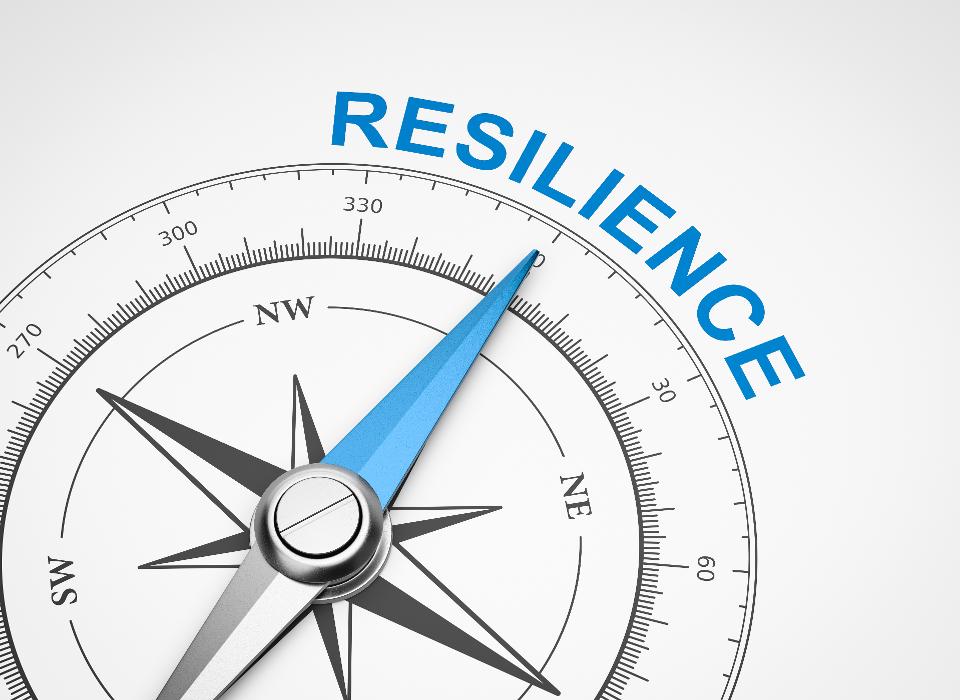
education
It’s always personal: Transformational Resiliency in Action-Reflect-Persevere!
Image Posted on Updated on
It’s always personal: Transformational Resiliency in Action-Reflect-Persevere!
I don’t remember consciously focusing on my personal resilience as a young child, yet, as I take a moment to reflect on some of the circumstances that are the collective of my now distant memories, I find myself remembering many moments that provide for my current awareness of what it takes to support resiliency development in our children today. Each of these memories includes not just an environmental scene, they also include people. People who made each situation personal, the good, and the bad, they are both personal.
Family circumstance, environmental situations, cultural dynamics, educational setting, and personal motivation and resolve, all are important ingredients to our memories, and though they are not an exhaustive list. they are important when we consider the need to support, nurture, and assist children with developing into well-functioning human beings. Yes, there is more to be considered when we try to address the needs of each child that we aim to support, but these categories help us understand ourselves just a bit more.
Within each of these categories further lies personal connections that must be present and forged for individuals to connect with their world and flourish into healthy humans. There are relationships that must be invested in and built for our memories to become solid foundations upon which children can grow. There are also moments that we should try to avoid so as to not create unwarranted trauma for children that could stunt their development. Can we control all of the moments in a child’s world, no, nor should we seek to control them all, yet we can focus on building more positive moments each day.
Read and reflect about these questions for a moment:
-Does your definition of “family” define you?
-Are you simply a compilation of every environmental situation that you have ever been in?
-Was your personality defined by your cultural teachings, and are you limited by historical offerings about your “culture”?
-Are you only as astute as the educational settings that you had the good fortune or mis-fortune to experience?
-Did you simply decide to become who you wanted to be, and you arrived?
More than likely your reflective answers to these questions are complicated, and truly could only be answered by understanding and discussing a multi-layred web of connections between these categories: family, environment, culture, education, and personal motivation and resolve, are inter-twined, and each of these components, especially as they relate to each of us, hold’s very personal memories, filled with relationships, and connections to other people. Thus, it is safe to say that these multi-layered web of connections are built upon thousands upon thousands of personal moments that we have lived, and more than likely have lived with others in our environments, which makes them personal not to just one person, but potentially to many.
These inter-twined moments, these opportunities to be somewhere, anywhere, with another person, especially children, cannot, and should not be taken for granted, as each of them holds an opportunity for a memory to be formed, a light to be lit, a true opportunity to support resiliency development. The development of a child’s positive mental health, and an opportunity for continued positive growth of the mind, are outcomes that we want more of for our children, so it is incumbent upon us to be aware, be conscious, be present at each of these moments, as they hold an opportunity to change the world. We must further recognize that each time we have the chance to connect positively in a personal manner with others, especially children, we must use that opportunity for good.
Am I finished growing, developing, shifting, becoming resilient? Not even close. Am I getting better at understanding that what I do, say, don’t do, don’t say, can impact those in my environment? I’d like to think that I’m getting better, and I hope you are too!
Please follow me @ResiliencyGuy and @DrRobM_FSUSD and continue to always help all of our children to “Grow in Peace!”

“Building the Resiliency of At-Risk Students”-Transformational Resiliency in Action
Link Posted on Updated on
“Building the Resiliency of At-Risk Students”
This last year I was honored to be asked to participate in a Post-Graduate Fellowship Program. A strategic partnership was formed with Drexel University and the California School Board Association (CSBA), and I worked with the CSBA Leaders over the last year to support changes to the education and training of members of the CSBA. Further, as part of the fellowship I wrote the following Governance Brief that has now been published by the CSBA.
I often write of the critical importance of each person, and the important and powerful changes to our world that can be initiated by just one person. Some have called this the ripple effect, or string theory, and I like to think of this process as an essential part of our lives that actually empowers both the initiator of a change, and those that the change positively affects.
This Governance Brief was written to support the over 5000 members of the California School Boards Association as they continue their important work of creating change within all of our schools in California. As members of multiple governance teams, each one of them has the power to become the initiator of change, the igniter of a new idea, and the person who might ask the question that will bring a new focus to the issues of positive mental health instruction in their district, and in turn could powerfully impact the lives of the hundreds, or thousands of students, that they have the due diligence to support. In this brief I further describe the concept of “Transformational Resiliency,” and present a few examples of schools where this process is taking root and supporting some of the neediest, grittiest students in our community.
The brief is also written as an educational resource and tool for those that are considering the importance of resiliency development for students, and hopes to inspire all who read it to take action. Take thoughtful, purposeful action to create environments where students are able to prosper, and “Grow in Peace.”
Here is the link: Please share this far and wide! It matters for all of our students.
You can also follow me @ResiliencyGuy and @DrRobM_FSUSD on twitter
#Resiliency-You Matter! You Make a Difference! You are Essential!
Image Posted on
@Resiliency #Resiliency
You matter! You make a difference! You bring the world to those you love! You are an essential person! Never underestimate this!
You matter! Is it hard to believe that you make a difference? Is it difficult to accept the idea that as a unique person your impact on the world should not be understated? Have you accepted the plain truth that those that you come into contact every day are significantly changed by your presence, your demeanor, your attitude, your actions, deeds, follow-through, words, care, compassion, truthfulness, and love towards them. As a unique person your imprint on the world that you live in is simply the most amazing thing to behold. We often consider the unique fingerprints that we leave on the world, yet we forget that our entire being is actually leaving an imprint on our collective world that we exist within, and that we can actually control what that imprint imparts onto this world. When you think about it in this manner how might you focus your energies to realize a powerful, positive lifeprint?
You make a difference! To those that engage in your world you may quite frankly be the most important person in their day, either in a positive or negative manner. When you interacted, did you smile, did you greet them, did you nod your head, did you grunt, did you use words to acknowledge them, did you engage in meaningful conversation? How you approach the world is your purposeful offering to each day. You can choose to remain cloistered within yourself, or you can choose to seek out new experiences, entice new perspectives, and gain a new understanding and compassion for the world, the choice is yours. The difference we make comes from our willingness to engage, to be a part, to seek to be a multiplier in our world, rather than to be a negative force, and pull energy out of the relationships we could have. When you approach the world from a perspective of engagement, connectedness, and with a desire to provide support and love to those in your world you add so much to the world that you cannot simply quantify your true impact on the lives of others.
You bring the world to those you love! You might believe that those you love and those who love you may be an exclusive group that belongs to each other, yet, when I speak of love in this general term, you may be loved by an extensive group of people that you don’t consider loving each moment of each day. If you are a teacher, you may be loved by students. If you are a boss, you may be loved by your employees. If you are a worker, you may be loved by your boss, you get the point. There are those in our worlds that might actually care about you and your existence, and what you do on a day to day basis impacts them, even if you don’t believe this to be true. This connectedness is how our world works, and as such your world can and does enter into the world of those within your circle of influence. So, be aware, be conscious, be resolved to bring a positive world to those you love!
You are an essential person! It might seem obvious to many, however I have spoken with many grown adults who work with children, and there are those that have not accepted this type of thinking. In fact, you might be surprised at the number of people that don’t necessarily believe this statement. You are an essential person! Could it be that so many adults have endured their own trauma in their lives that even though they were able to make it through adolescence, college, and even start a career, that deep within them lurks a hurt child that may need to be healed? You are an essential person! It is important to understand that as those who serve we need to be mindful of our own inner thinkings, and work to be healthy oursleves in order to promote positive health for others. Recognize this, seek to ensure you believe you are essential, and continue your journey to help others.
Never underestimate this! You matter! You make a difference! You bring the world to those you love! It has been said that to overcome adversity takes resiliency. I would argue that from a research perspective, cognitive, and an emotional perspective that resiliency development can and should be fostered in each classroom, each school, each educational community, and to our broader communities. Further, this type of approach is not found hidden within the creases of a book, but in the true action of people just like you and I who come to realize that we matter, that we can empower others, and that our being here is a matter of great importance to the betterment of the world.
I hope some of these words impact you in a positve way, empower you to act to be more in tune with your world, and to engage through connectedness to those in your world, because why? Say it with me, YOU MATTER!
Plase continue to help children to “Grow in Peace!”
@ResiliencyGuy @DrRobM_FSUSD

Building Relationships and the Resiliency Development Connection
Image Posted on Updated on
Each person is the most important person in the world!
It is personal: Building relationships is absolutely a personal endeavor, and builds resiliency skills in others!
It’s life, it’s personal, It’s about relationships, it’s so important!
Life is messy, we are not perfect, yet we are human, which makes us persons, which means that everything that we do is personal. We may think that we stand alone, yet even when we consider ourselves to be detached from a situation, like it or not, we are connected to the world.
We are in relationships by choice, by chance, and by acquaintance. We are actually in a number of relationships that we might not even realize. If you have children, if you have students, if you are a boss, or an employee, if you are in some kind of relationship that involves love, desire and passion, if you used to be in a relationship, guess what, you are part of the world, people count on you, you are important, and these people you connect with or don’t are important to you. You are a person! You belong to the world, and the world belongs to you.
As you ponder this further, consider that each person, yes, each person, is the most important person in the world, and each person that you meet, greet, and welcome into your life stream deserves your best efforts in connecting with them, and in your desire to strive to build a relationship with them that is based on dignity, respect, equity, trust, support, guidance, and dare I say love. Building and maintaining meaningful relationships is one of the most important assets that any of us can add to our personal skills.
We, each of us, holds an immeasurable ability to convey positive healthy emotions to others, yet to do so in healthy ways, we must first understand the importance of each opportunity to build these healthy relationships, and we must be conscious in our thoughts and actions, and purposeful in our desire to meet others where they are in order to connect. We must then act with purposeful intent to move the relationship forward. As I mentioned this is messy work. It can seem overwhelming and even a bit over-burdening to consider the importance that you have in so many lives, and yet, if you are an educator, as many of my readers are, you simply hold one of the most important roles there could ever be, that is to connect with your students to support their positive development and foster the development of their latent resiliency.
Connect with students via communication. Connect by finding out their interests. Connect with them by listening, understanding them, hearing about their families, learning what makes them tick, grasping that as individuals they each have unique ideas, feelings, perceptions of the world, goals, and difficulties that they have overcome, are enduring, or have yet to face. Connect with your students by showing them the stepping stones across the garden, the safe spots to cross the river, and by teaching them and preparing them for the next adversity that may come their way. These moments are essential to positive growth and development and each of these moments cannot be under-valued in crafting each positive relationship.
Yes, it is true, each of us is moving so fast, at seemingly lightning speed, from one activity to the next, from one situation to the next, from one text to another, through social networking sites, back through our tweets, and we often forget, that the most important people that we have ignored during our days, truly need us the most.
So, what to do? Well, stop, reflect, consider those around you, and realize that as people, the strongest of us has more than likely suffered significant losses, struggles, overcome severe trauma, and have developed a tremendous wealth of resources that we can share with others. Each of us to some degree can make a positive impact if we choose to do so. Each of us can add to the collective betterment of our world if we choose to do so. Each of us has the ability to connect with those in our world to make a positive difference. Will we? I hope so, because I believe that each person is the most important person in the world. How about you?
Robert A. Martinez, Ed. D.
#Resiliency, #Transformational-Resiliency, #Education,
@ResiliencyGuy @DrRobM_FSUSD

Thinking About the Grit-Transformational Resiliency Connection
As a lifelong educator, researcher on resiliency development, empowerer of humans, and believer in the power of resiliency, I sugest that when we speak of “Grit” we must consider that it is our collective responsibility to strive at all levels of our educational communities to provide environments for students that are calm, supportive, encouraging, thoughtful, and planned, which provide opportunities for students to ignite their latent capabilities to be resilient.
I have begun to bring forth the conceptual idea of “Transformational Resiliency” which denotes just this, a purposefully designed environment where students are afforded the opportunities to be resilient, develop responsibility, and build positive relationships with others. When we as educators come to understand that it is a moral imperative to provide students with such environments we have taken the first step towards transforming each teaching opportunity. When we decide that it is important for us to expect and provide each and every teacher with the tools to craft these types of environments we further the notion of not only equity for students, but our belief that above teaching students, we are teaching human beings.
Some might argue that this is an impossible task, however, I would argue that this task is absolutely achievable, and in fact, is an absolute necessity in order for our students to actually develop, grow in peace, and enhance their personal abilities and capabilities. We must remember, for so many children who have experienced trauma, live in difficult family situations, or are marginalized by poverty, etc., we must understand that they are more than likely not lacking “grit,” Children who have survived so many difficulties, who persevere each day, who actually make it to their classrooms actually may have more internal “grit” than most.
We must consider that It could be that these children actually have developed a very strong internal level of grit which has helped them to survive, yet may not have had an opportunity to tap their latent resiliency, to the degree that we would like to see.
I put forward the notion that no matter the socio-economic situation a school is located, no matter the content area of the teacher, no matter the life circumstances of the family that a child belongs to, and no matter the grade level or age of the child, it is absolutely essential for a teacher, all teachers, to consider the social-emotional health of his or her students, and then plan accordingly to indeed provide high rigor in the area of content development, and more importantly remember that one of the more important goals for each day’s lesson would be to focus on developing a student’s wellness to become a healthy human being.
As we strive to connect with students, we must strive to connect with their families. As we strive to support our students growth, we must recognize that it is first our growth that is important in structuring environments that are conducive to their success. As we strive to develop “Grit” in students, we must recognize that some of our children are actually “Grittier” than we can every imagine. As we strive to act to implement “Transformational Resiliency,” we must consider that as we ignite a student’s ability to be resilient they just might be overcoming adversities we have yet to see.
We can do this, together. We can assist all children to “Grow in Peace!”
@ResiliencyGuy
Grow in Peace!
Grow in Peace
Each moment that we are afforded an opportunity to educate, coach, raise, support, and build relationships with children, presents opportunties for us to support them in growing, developing, and becoming well-functioning individuals. As adults we collectively take on this responsibility not only to personnaly receive the benefits of providing service to children, but I also believe that we all hope that the children, in turn, will be able to become well-functioning citizens of our society, and one day return the favor to the greater good.
That being said, this opportunity to educate can be seen an an ominus task at hand for some, and should be seen a responsibility that cannot be lightly disregarded by all of us. For if we shy away from this responsibility we may forever lose this opportunity to support positive changes in the environments of the children we serve, and could miss out on an opportunity to support them through an approach of “Transformational Resiliency,” which in turn could limit their broadening horzions.
In a simple tweet I wrote, “@ResiliencyGuy: #Resiliency All students deserve the opportunity to grow in peace. Calm, nurturing environments that support Transformational Resiliency!”
Here’s more of what I meant by this tweet: We, as educators, teachers, leaders, coaches, parents, have an individual and collective obligation to provide children environments, be they at school, on the playing field, at home, in our worship centers, etc., where they are given every chance to be able to grow, learn, develop, and evolve, in peaceful arenas. It is a moral imperative to do so, not jst a good idea!
These peaceful arenas should be places where: shame does not exist, planned learning is consciously thought out, sponatneous learning is recognized for it’s importance, thoughtful secure risk-taking opportunities are provided, multi-modal learning opportunities are contagious, and where, respect, ethics, integrity, compassion, and caring are modeled and expected from each person within the environment. If we strive to create these places, and include children in the development of these peaceful places in a thoughtful, calm, nurtuting manner we are in fact supporting “Transformational Resiliency.”
If each of us considers the need to consciously think of the environments that we provide to our children, and to take the time to create these environments that are supportive of childrens’ growth, then we truly are working towards building environments that support “Transformational Resiliency.”
On the same night in a #TLAP (Teach LIke a Pirate) chat I wrote, “@ResiliencyGuy: When anxiety is high for the young brain learning becomes more difficult, remember zone of proximal development, grow in peace.”
If we are careless in our planning, if we are lacking in thoughtfulness in our actions, if we fail to consider the needs of our children as we try to create positive environments, we run the risk of misaligning all of our teaching and our goals for our children with places that do not provide calm, nurturing environments, and where anxiety within students may prevail. Now, none of us desire to create places that do not provide a secure location for children to prosper and grow, so we all must work, ever vigilant, to create supportive environments that all of our children deserve!
Let’s work on this: All students deserve the opportunity to grow in peace. Calm, nurturing environments that support Transformational Resiliency!
Follow me on twitter @ResiliencyGuy
What verse will be written about you?
 How will your chapter read? What will they write about you? What emotions will come of your memory?
We often think of ourselves as the protagonist in our own stories, yet, more importantly we might want to consider how we might be described in the stories that our loved ones, friends, acquaintances and even strangers write about their interactions with us. Will your memory hold prominence due to your positive actions, demonstrated integrity, personal commitment to supporting people, or might you be dismissed and edited out of the story as irrelevant, and as a character lacking depth and powerful association with the development of the story?
Will you be described as being a “pivitol” character standing by the writer during that life-changing moment, or as an “extra” filling in the long-shot, just outside of the frame? Will they mention how your spirit, heart, mind and soul served to support the positive that was realized in their life?
Will you be the fondly remembered as a thoughtful, careful listener, who, through solution-focused conversation never really told someone what to do, yet taught a lesson or two that could be remembered years later, or as someone who simply pontificated your point of view without ever really listening, demonstrating compassion and/or empathy?
While it has been said that we all can and should write our own verse in this world, with a nod to “Dead Poet’s Society”, what we might want to focus on is a question that might be more apropos. For this question just might be a bit a more important when a measure of our effectiveness is taken. The question: What verses will be written about you, about your lived character, and about the memories that evoked when someone reflect about you?
The lesson to live is to be the person you want to be remembered as! Be amazing! Be relevant, be pivitol, be constructive, be memorable! Be you! Be part of providing an environment of peace for others, of calm where students can flourish, where students can grow in peace. Peace, in deed!
Transformational Resiliency
I define Transformational Resiliency as the following: The growth, development and strengthening of a child’s personal resiliency as a result of providing an engaging, positive, thoughtful, supportive, educational environment. This blog is intended to provide an avenue to share ideas, concepts, approaches, and thoughtful considerations to do just that. I believe that the ownership of the current state of affairs belongs to educational leaders, school and district governance teams, teachers, communities, and children themselves, who hold the power to become resilient if they are provided opportunities to do just that.
A few months ago I wrote an article that addressed four specific actionable strategies that school administrators could focus on to advance their schools focus on Transformational Resiliency. I provide them again here for your consideration.
1. Participate in purposeful and conscious actions essential supporting resiliency: This means that school leaders must make and take the time to discuss with their staff members the importance of making connections with students across their campuses. These connections are relevant, and important to support the preventative factors that a child needs to persevere through the adversity they may face during their developmental years.
2. Communicate by various means to reach, engage and support students: As simple as it may sound, taking time to communicate with children on a daily basis via conversation cannot be understated. When we take the time to speak to children and their families we quickly demonstrate that we care, we are thoughtful about them, and that we can see their future in our eyes, even if they might not be able to see it themselves. We demonstrate the importance of each person we come to know.
3. Develop and provide links for students to connect with other educators, school support members, community services and each other: The links to other healthy adults provides students with more data as to opportunities they have to become well-functioning adults. Whether these connections are person to person, or are person connected to the organization, via a parent night, movie night at school, reading club for students and parents, the more connections that are present and provide opportunities the better.
4. Welcome and honor every student interaction, every opportunity to connect with a student’s family, no matter who it may be: Recognize that every moment a child is attending school is an opportunity for Transformational Resiliency to occur, and for that child they have a unique home life, a unique home structure, and we must work to accept everyone who is part of that structure. By letting go of our preconceived notions, and or ideas, we can offer support, care, and yes, love to children and their families. When we do this we offer concrete impressions of our offer of dignity and support for the children we serve.
When students are engaged in rigorous academic environments, taught that having a positive mental outlook is an important part of becoming a well-functioning adult, and are supported in developing their resiliency skills, then we are indeed creating environments where Transformational Resiliency is coming to fruition.
More to come in the future, @ResiliencyGuy, Robert A. Martinez, Ed. D.

- ← Previous
- 1
- 2
 Recipes For Resilience